
Last updated November 15, 2026
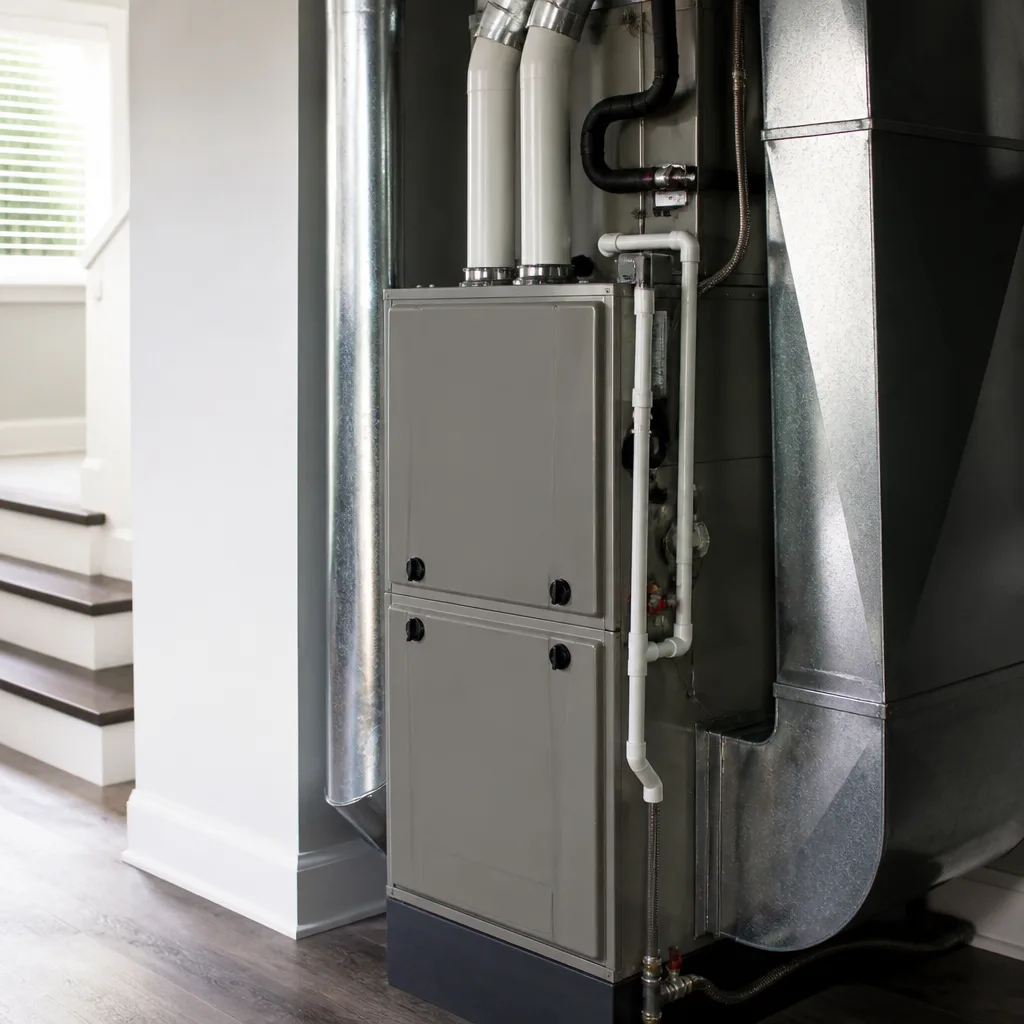 Furnace & heating
 AC repair
 Heat pumps
 Ductless mini splits
 Carrier
 Trane
 Goodman
Seasonal tune-up and full diagnostic on your Carrier, Trane, or Goodman system - readings shown to you before any repair is proposed
Diagnosis first, numbers second - you approve the repair price before a single part goes in.
Get your free estimateFurnace Replacement Troubleshooting in Hialeah: Common Problems and How to Fix Them
If your brand-new furnace is short-cycling, blowing lukewarm air, or tripping the breaker within a week of installation, the furnace almost certainly isn’t the problem. And replacing it again won’t fix anything. In our experience, most furnace replacement problems in Hialeah go sideways in the first 30 days after the swap, not during it. New equipment meets old ductwork. A communicating furnace meets a thermostat from another era. A high-efficiency condensing unit starts producing water that the original slab-home drain line was never sized to carry. This guide walks through the post-installation problems we actually get called about: what the symptoms mean, how to tell an installation fault from an equipment fault, and what to do next. It’s written to help you know the difference before anyone quotes you a second furnace.
Quick Answer
Most furnace replacement problems in Hialeah trace back to installation variables, not defective equipment. Short-cycling usually points to an oversized unit, a clogged filter bypass, or a faulty pressure switch; lukewarm air after a high-efficiency install often means a thermostat isn’t communicating; and water pooling near a new condensing furnace usually means the old drain line can’t handle the condensate. The furnace itself is rarely the culprit, and a proper diagnostic on the installation details usually finds the answer in under an hour.
Styles & brands we work with
- AC repair
- Furnace & heating
- Heat pumps
- Ductless mini splits
- Carrier
- Trane
- Goodman
Table of Contents
- Why is my new furnace short-cycling after replacement?
- Thermostat compatibility failures after a furnace swap
- Condensate problems in Hialeah slab homes
- Airflow noise and hot spots after replacement
- Error codes on the five most common furnace brands in Hialeah
- A step-by-step way to diagnose post-installation problems
- Repair or replace again? How to know what’s actually wrong
Why is my new furnace short-cycling after replacement?
Short-cycling after replacement is almost never a failed furnace. It’s a mismatch between what the unit was sized or configured for and what the Hialeah home is actually doing. The three causes we diagnose most often are oversizing, a dirty filter bypass, and a faulty pressure switch on the new unit. Each presents slightly differently, which is why a proper diagnostic matters more than a parts swap.
Oversizing. If a contractor matched the new furnace to the old one without running a load calculation, the new unit may be heating the house faster than the thermostat can register. It satisfies the setpoint, shuts off, and the indoor temperature drops faster than expected, triggering another call for heat. The rooms feel fine; the cycle count is the tell. A furnace that runs five to eight minutes and quits is working correctly. One that runs two minutes and quits is fighting a sizing or thermostat problem, not a furnace failure.
Filter bypass. Newer, higher-efficiency furnaces are more sensitive to static pressure than the units they replace. If the filter cabinet wasn’t enlarged during the swap, or the filter slot is pulling air around the edges rather than through the media, the blower sees less resistance than the control board expects. Some units handle this by running longer, others cycle on the high-limit switch. Either way, a look at the filter cabinet usually finds the answer in a few minutes.
Faulty pressure switch. A pressure switch on a new unit can fail right out of the box, or its sensing tube can be kinked, condensed, or improperly routed during installation. The furnace fires, the inducer proves draft briefly, then the switch drops out and the board resets the sequence. If your new furnace runs a short cycle and shows an error code strobe on the control board, the pressure switch and its tubing are the first things to check.
If we’re called to a short-cycling complaint in a Hialeah home, we come prepared for all three possibilities, because a single-visit diagnostic on a replacement problem is cheaper than a second visit. Our technicians have up to 10 years of experience across the equipment lines that show up most in this city.
Thermostat compatibility failures after a furnace swap
Thermostat compatibility is the most underdiagnosed problem we see after a furnace replacement in Hialeah. Older Honeywell mercury thermostats, still common in homes built in the 1970s and 1980s across neighborhoods like Palm Springs and Hialeah Gardens, are two-wire or four-wire devices. They send a low-voltage signal on a simple on/off basis. A new communicating furnace, particularly a Carrier or Bryant variable-speed model, expects a proprietary data connection. Pair the two without a compatibility check and you get one of two results: the furnace runs at a fixed low stage and never reaches a comfortable temperature in cold snaps, or the control board throws a fault on start-up that looks like an equipment failure.
The fix isn’t to replace the furnace again. It’s typically one of these three:
- Install the furnace’s matching communicating thermostat. Carrier Infinity and Bryant Evolution systems are designed to work with their own controls, and using one unlocks the variable-speed and modulating features the equipment was purchased for. Older stats technically work but sacrifice efficiency.
- Reconfigure the furnace control board for a conventional 24-volt thermostat. Most variable-speed units can be reconfigured in the field to accept a standard stat. The furnace runs at a single stage, which is less efficient but functional.
- Upgrade to a modern programmable or smart thermostat compatible with the furnace’s staging. This is often the middle path: not the manufacturer’s full communicating line, but a two-stage capable stat that lets the furnace use its lower stage for milder Hialeah days.
What we tell homeowners before any replacement is straightforward: the thermostat you have in the hallway matters as much as the furnace in the closet. Pairing a mid-range thermostat with a mid-range furnace is fine. Pairing an old stat with premium equipment wastes the equipment. Know before we arrive which stat you’re working with, and we can plan the replacement wiring correctly from the start.
Condensate problems in Hialeah slab homes
High-efficiency condensing furnaces produce water as a byproduct of combustion. In cold climates that water freezes and creates icicle-sized problems on vent terminations. In Hialeah, the winter is mild, so freezing isn’t the issue. The issue is drainage, and specifically what happens when a new condensing furnace dumps a steady flow of mildly acidic condensate into a drain line that was sized for an old atmospheric unit and a washing machine.
Hialeah’s slab foundation housing stock makes this worse. Slab homes built before the widespread use of condensing equipment often run their HVAC condensate through a small-diameter line tied into the condensate pump, a floor drain, or in some homes a line run under the slab to a hose bib or exterior termination. When the new furnace starts sending condensate at a higher volume, one of these happens:
- The original drain line clogs faster than expected, and the furnace’s condensate pan overflows into the cabinet, tripping the drain safety switch and shutting the system down.
- The line is pitched wrong, and water sits in a low spot, freezing nothing but corroding the trap or growing biological buildup in a few months.
- The line terminates outside with too shallow a slope, and during heavy Hialeah summer rains the termination backs up and holds water against the cabinet.
- The line is routed through an unconditioned attic space where summer humidity raises the surrounding dew point and the pipe sweats, dripping onto the ceiling below.
The fix is rarely complicated, but it does require the installer to look at the condensate route during replacement, not after. A properly installed condensing furnace in a Hialeah home should have an adequately sized drain line, a correct slope from the furnace to the termination point, and a safety switch in the pan. If your new high-efficiency furnace is shutting off every few hours in mild weather and the code on the board traces to the drain, this is why.
Airflow noise and hot spots after replacement
New furnace, same ducts, new noise. This is one of the most common complaints we hear in the first month after a replacement, and it almost always traces back to duct connections that weren’t re-sealed during the swap. When the old furnace comes out and the new one goes in, the plenum connection at the top of the unit, the supply transition, and the return drop all come apart and go back together. If the seams aren’t taped and mastic-sealed the way they should be, the blower pressurizes the cabinet but leaks air at the transition. Two things follow.
Noise. A new variable-speed or two-stage furnace often runs at a lower blower speed than the unit it replaced, and airflow through an oversized or undersized duct system at low speed can create a whistling or whooshing sound at the registers. Sealing every leak point at the plenum and checking that the return is adequately sized usually resolves the noise, but sometimes the fix needs a small duct modification.
Hot and cold spots. After replacement, if one bedroom is warm and another is cool in a way the old furnace didn’t produce, the cause is usually one of two things. Either the new furnace is pushing air differently than the old one (different blower characteristics, different static pressure), or one of the duct runs got disturbed during the swap and is leaking into an unconditioned space. A quick pressure check on the plenum tells you which.
The right approach is a post-installation airflow check, not a duct replacement. Most of the airflow issues we see on furnace replacement calls in Hialeah resolve with re-sealing and a blower speed adjustment in the same visit.
Error codes on the five most common furnace brands in Hialeah
Every modern furnace has a control board with an LED diagnostic. The board flashes a code, and the code tells the technician which part of the ignition or safety sequence failed. Knowing what the code is saying saves the homeowner from a diagnostic visit that turns into a guess. Here’s how the codes generally read on the equipment lines we see most in Hialeah homes, and what each family of codes is usually telling you. Exact codes vary by model, so this is a general guide, not a substitute for the diagnostic chart on your specific unit.
- Carrier and Bryant (shared platform): A three-flash sequence on these boards usually indicates a pressure switch fault – either the switch stuck closed, the tubing is kinked, or the inducer isn’t bringing draft. A four-flash sequence points to the high-limit switch, which most often means restricted airflow (filter, blocked return, or undersized duct). A continuous flash is the board signaling a specific fault pattern that requires the model’s diagnostic chart.
- Trane and American Standard (shared platform): On these boards, a code pointing to “pressure switch open” or “pressure switch stuck closed” is the most common post-installation reading, and it’s the same category of issue: draft proving failure. A code for “limit switch open” is airflow. Codes on these units often display as a repeated blink pattern with a pause between sequences.
- Lennox: Lennox boards are less standardized across models than Carrier or Trane, so reading a code requires the specific model chart. The most useful step before calling is to note whether the flash pattern repeats a short count (one to five) or a longer pattern (six or more), since long patterns tend to indicate a component fault while short patterns tend to indicate a sequence fault.
- Goodman: Goodman control boards typically flash a steady code when the unit fails to complete a cycle. A code for “pressure switch” on a Goodman installed during replacement is often the switch tubing, not the switch itself. A code for “flame sensed out of sequence” almost always traces back to a wiring or gas valve issue at installation, not a defective valve.
- Daikin: Daikin’s furnace line uses LED codes with a distinct pattern for vent pressure faults and limit faults. Daikin systems with a communicating indoor unit sometimes report codes through the thermostat rather than the board, which is worth noting before you start reading flashes.
- Rheem and York: Both brands use a fairly standard flash pattern, with three flashes generally indicating a pressure switch or draft issue and four flashes indicating a limit or rollout. On a new installation, four flashes almost always means airflow rather than a failed rollout switch.
What every code family has in common: on a furnace installed within the last month, a code pointing to pressure, draft, limit, or airflow is almost always an installation variable, not a component failure. The wiring, the tubing, the filter cabinet, or the duct transition. That’s the first place a technician should look.
A step-by-step way to diagnose post-installation problems
Before you call anyone, there are a few quick observations that help a technician diagnose the problem faster and often catch the simplest causes. This isn’t a DIY repair guide. It’s a way to gather information so a service visit resolves in one trip instead of three.
- Note the exact cycle pattern. How long does the furnace run before it shuts off, and how long does it stay off? Two minutes of run time means something different from twelve minutes of run time. Write it down.
- Read the code on the control board. The board is behind a service panel on the furnace cabinet. With the power off, remove the panel, turn power back on, watch the LED, and count the flash pattern. Note the number of flashes and the pause pattern.
- Check the filter. A filter that was correct for the old furnace can choke a new one. If the filter is more than a month old or visibly dark, replace it with the size the new furnace spec sheet calls for.
- Look at the condensate pan and drain line. Any standing water in the pan, any dripping from the cabinet, or any wet spot on the floor next to the furnace is a drain problem worth naming on the call.
- Note whether the noise is at the furnace or at a register. Furnace noise is usually the plenum connection or blower. Register noise is usually the duct run or the return.
- Write down the thermostat model. The brand and model number on the thermostat tells a technician whether it’s compatible with the new furnace or whether the control board was configured correctly.
Bring that information to the call. It’s the difference between a technician arriving prepped to solve the actual problem and one arriving to gather data. For a full range of furnace repair services in Hialeah, we handle both the diagnostic and, when it’s warranted, the warranty coordination with the installation contractor.
Repair or replace again? How to know what’s actually wrong
If a contractor is telling you the new furnace needs to be replaced, the first question is not how much. It’s why. A furnace that was installed in the last 30 to 90 days and is behaving badly is, in most cases, behaving that way because of something in the installation. Replacing it again without diagnosing the actual problem just puts a new furnace in the same mismatched setup and reproduces the same symptom. That’s the most expensive way to spend money on HVAC.
In practice, this is how the decision usually breaks down:
- Fixing a configuration or installation issue (thermostat compatibility, filter bypass, condensate routing, plenum sealing). Almost always the right first move. These are relatively short repairs and they address the actual cause.
- Fixing an equipment defect still under the manufacturer’s parts warranty. Rare, but real. Pressure switches, control boards, and inducer motors are the most common early failures. A warranty claim coordinated with the installer or the manufacturer is the correct path.
- Replacing the furnace a second time. Only appropriate when the equipment is fundamentally wrong for the house (gross oversizing not correctable with a control board reconfigure, or a load calculation showing the wrong unit was specified) or when a component failure isn’t covered and the cost of the repair rivals the cost of replacement.
Because we handle both repair and replacement under one company, we don’t have a reason to push one over the other. The recommendation on the call is based on what the equipment is actually doing, not on what’s more profitable to sell. If the answer is a small fix, the answer is a small fix. That’s how we stay honest on repeat-call diagnostics.
Common Mistakes to Avoid
- Assuming a new furnace means a new start. Existing ductwork, thermostats, and drain lines carry forward into the new installation, and any mismatch in those carries forward too. The equipment may be new, but the system around it isn’t.
- Skipping the manual J load calculation on replacement. Matching the old furnace’s tonnage is not the same as running a load calculation on the Hialeah home. Sizing on the old unit reproduces the old unit’s assumptions, including oversizing that was already there.
- Reusing an old thermostat on a premium furnace. The pair works well enough to run but leaves the variable-speed or modulating function unused. You paid for the equipment and got the efficiency of a lower tier.
- Ignoring the condensate route during the swap. Hialeah slab homes often have undersized drain lines for the higher-volume condensing furnaces now going in. Rerouting during installation costs little. Cleaning up after an overflow costs more.
- Not re-sealing the plenum and return connections. The seams at the top of the furnace and the return drop come apart during every replacement. If they aren’t taped and sealed, the noise and hot spots follow. Check the seal before the truck leaves.
- Accepting a “replacement needed” answer without a code read. A diagnostic that finds a pressure switch, thermostat, or drain issue and jumps straight to a second replacement is worth a second opinion. The code on the board tells the truth about whether the equipment failed or the installation did.
- Calling the original installer back without a written record. Before any follow-up visit, note every symptom in writing, including the cycle pattern, the code flashes, and whether the room temperatures are different from before the replacement. It’s the difference between a solved problem and a repeated visit.
See the difference
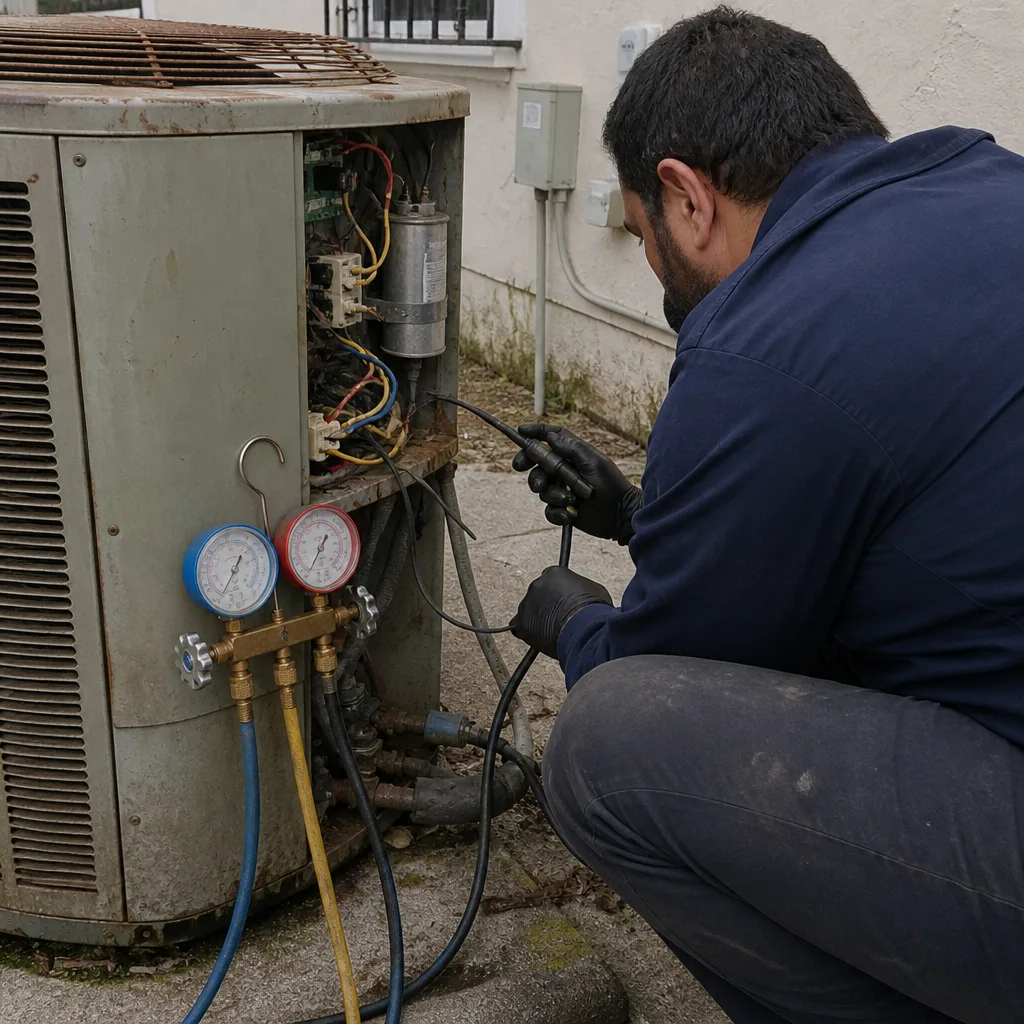 Before
 After
 Before
 After
 Before
 After
When to Call a Professional
Call a professional when the furnace is short-cycling, blowing lukewarm air, running a pressure switch code, or shutting down with a limit code. Those are the post-installation problems that benefit from a trained diagnostic, not a homeowner guess. Call today if you smell gas, if the furnace shows a rollout code, or if the cabinet gets hot to the touch: those are safety issues, not performance issues, and they need eyes on them now. If your new furnace is producing water around the base or tripping a breaker within a week, call before running it again. We answer 24/7. Fast dispatch from 7am to 7pm, Sunday through Friday. Banner AC Repair offers free estimates in Hialeah. Call (866) 806-7345.
Frequently Asked Questions
The furnace most often isn’t the short-cycling problem. The three likely causes are an oversized unit that heats faster than the thermostat can register, a dirty filter bypass that throws off the blower’s static pressure reading, or a faulty pressure switch or kinked pressure switch tubing on the new unit. A technician reading the control board code usually identifies which of the three it is in one visit. Call (866) 806-7345 and we’ll diagnose what the code is actually saying. Estimates on repairs are free.
Sometimes, but not at the equipment’s full capability. Older mercury and low-voltage Honeywell stats send a simple on/off signal, while communicating furnaces like Carrier Infinity or Bryant Evolution expect a proprietary data connection. The furnace can usually be reconfigured to accept a conventional 24-volt thermostat, but the variable-speed and modulating features the equipment was purchased for won’t function. A compatibility check before replacement avoids the problem entirely.
Condensing furnaces produce water as a combustion byproduct, and that’s normal. What’s not normal is water in the pan, water on the floor next to the cabinet, or the system shutting off with a drain fault. In Hialeah slab homes, the original condensate line often isn’t sized or sloped for the higher volume a condensing furnace produces. Rerouting the drain line during installation or shortly after solves the issue in most cases.
The code identifies which step of the ignition or safety sequence failed, not which component is defective. On Carrier, Bryant, Trane, and American Standard boards, a multi-flash pressure code usually points to a draft proving failure, and a limit code points to airflow. On a furnace installed within the last month, those codes almost always indicate an installation variable rather than a failed part. Bring the flash pattern to the call and a technician can plan the visit correctly.
Usually no. Replacing a just-installed furnace without diagnosing why the first replacement misbehaved just puts new equipment in the same mismatched setup and produces the same symptom. In our experience, the vast majority of post-installation issues resolve with a thermostat reconfiguration, a filter cabinet correction, a condensate reroute, or a plenum reseal. Replacement is the right call only when the original equipment is fundamentally wrong for the house or a component failure isn’t covered by warranty.
Yes. We work on the equipment itself, regardless of who installed it. Our technicians are trained on Carrier, Trane, Lennox, Goodman, Rheem, York, Daikin, Bryant, and American Standard, which covers the equipment present in most Hialeah homes. Call (866) 806-7345 to book a diagnostic. We answer 24/7. Fast dispatch from 7am to 7pm, Sunday through Friday.
The Bottom Line
When a new furnace acts up in Hialeah, the furnace is usually the last thing to suspect. In our experience, the first 30 days after replacement are where the real problems live: old thermostats talking to communicating furnaces, slab-home drain lines that can’t handle a condensing unit’s condensate, plenum seals that came apart during the swap, and oversized units cycling on the high limit. None of those require another furnace. They require a diagnostic that actually reads the code, checks the thermostat, looks at the drain line, and pressure-tests the plenum. Whether your American Standard system needs a warranty-coordinated component repair or your Daikin furnace needs a control board reconfigure, our technicians have up to 10 years of experience on both AC installation and heating work, and we’ll tell you what the equipment actually needs.
We work across the Hialeah neighborhoods where post-installation furnace problems show up most, and we handle the Banner AC Repair heating and cooling scope under one company so there’s no coordination gap between an AC installation and a furnace replacement. Call (866) 806-7345 for a free estimate. We answer 24/7. Fast dispatch from 7am to 7pm, Sunday through Friday.
Written by the team at Banner AC Repair.