
Last updated November 15, 2026
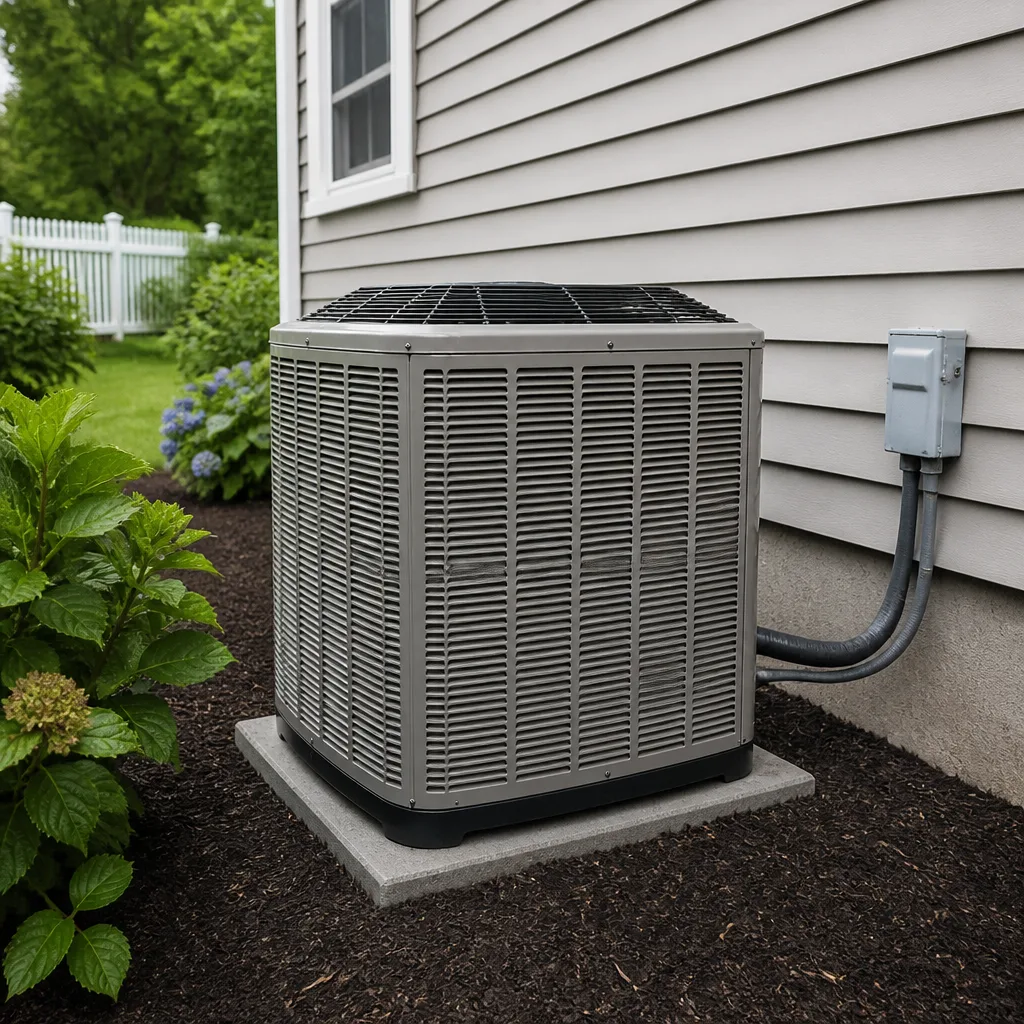 AC repair
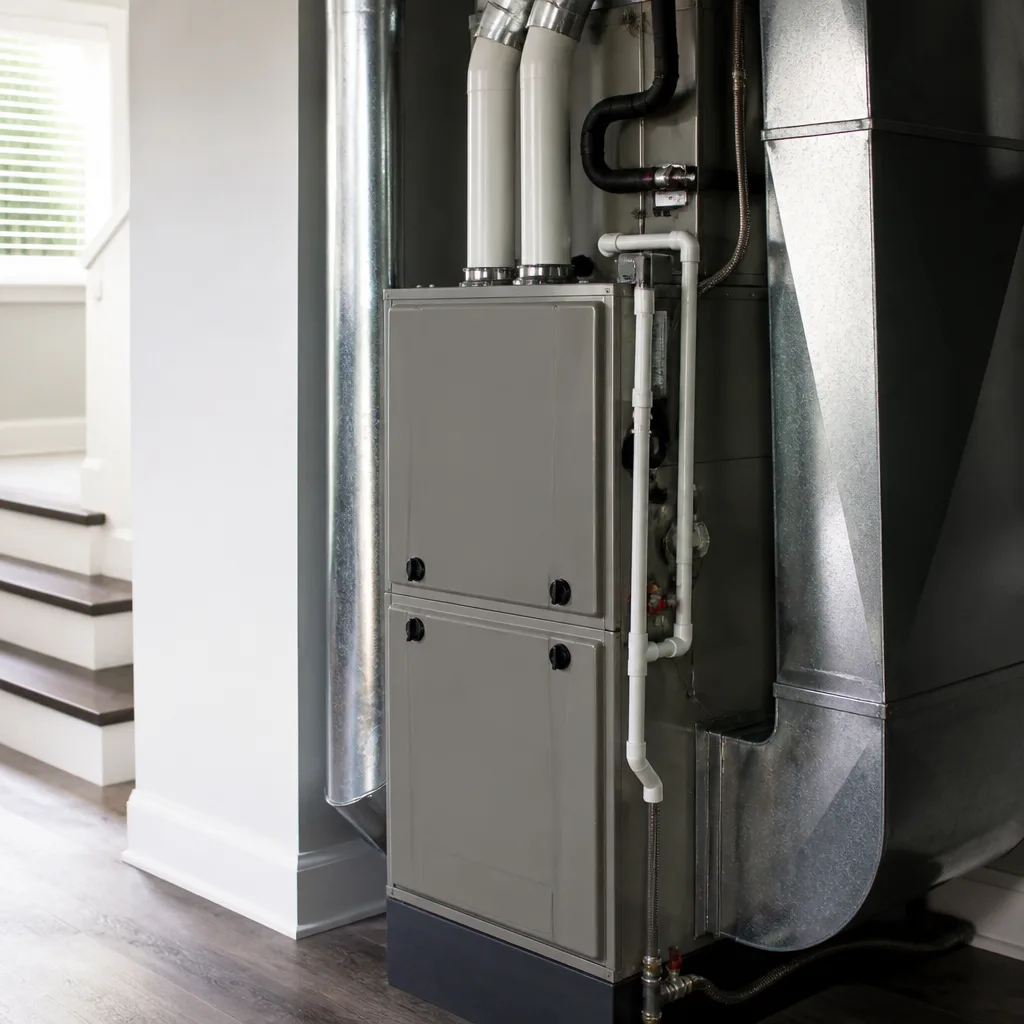 Furnace & heating
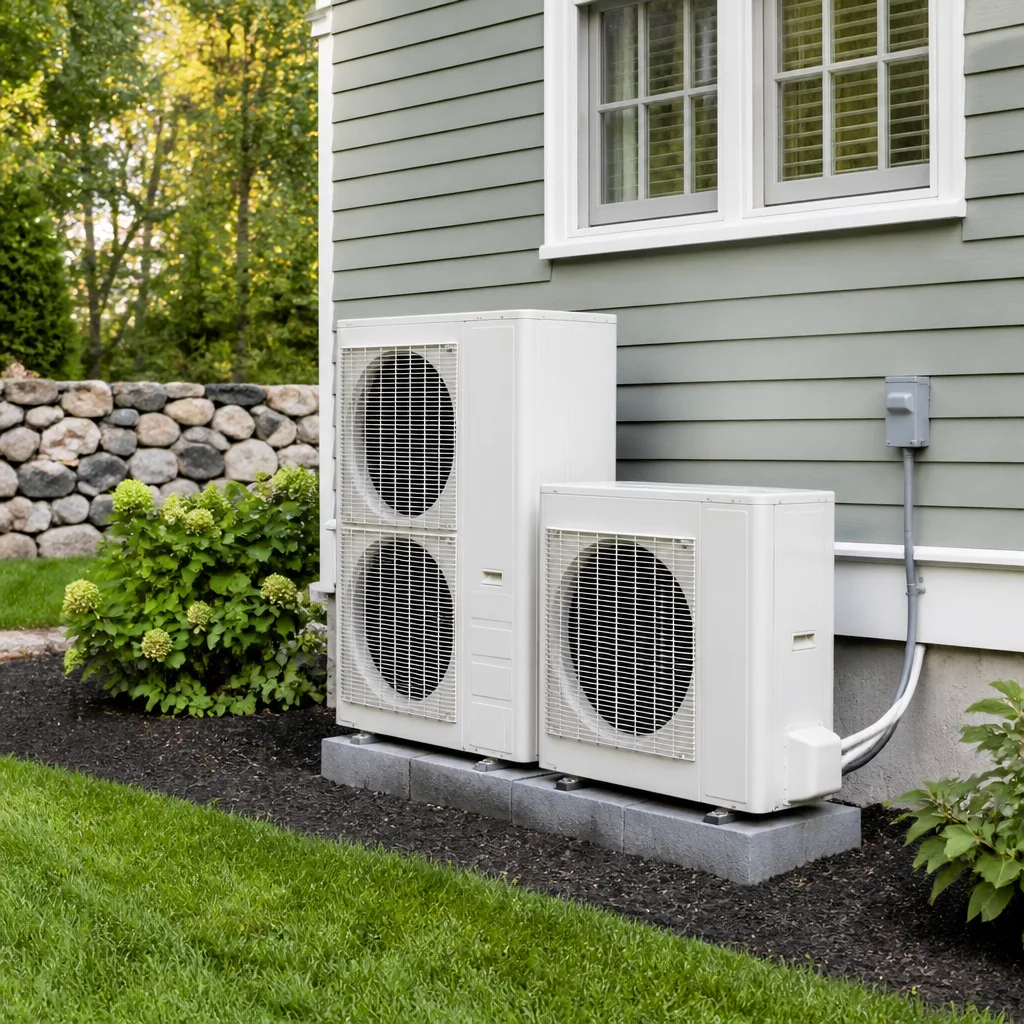 Heat pumps
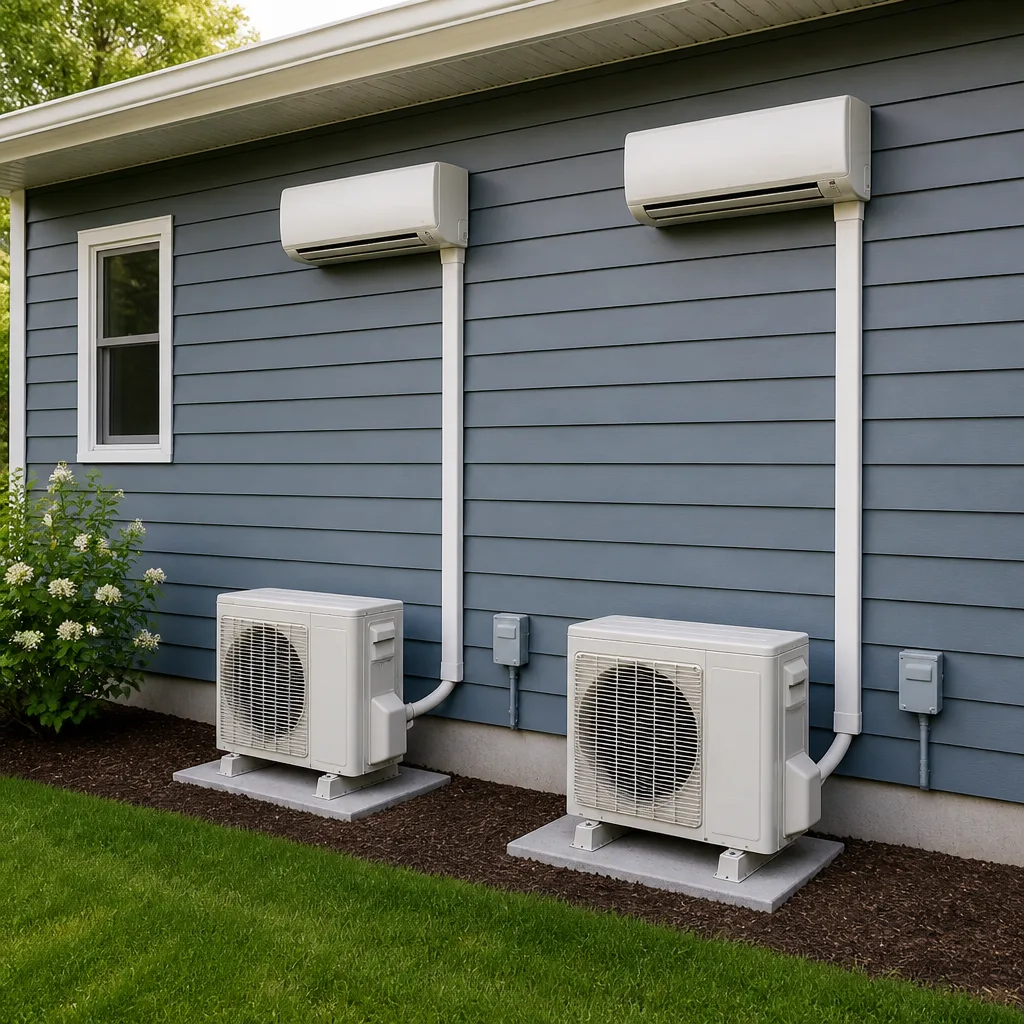 Ductless mini splits
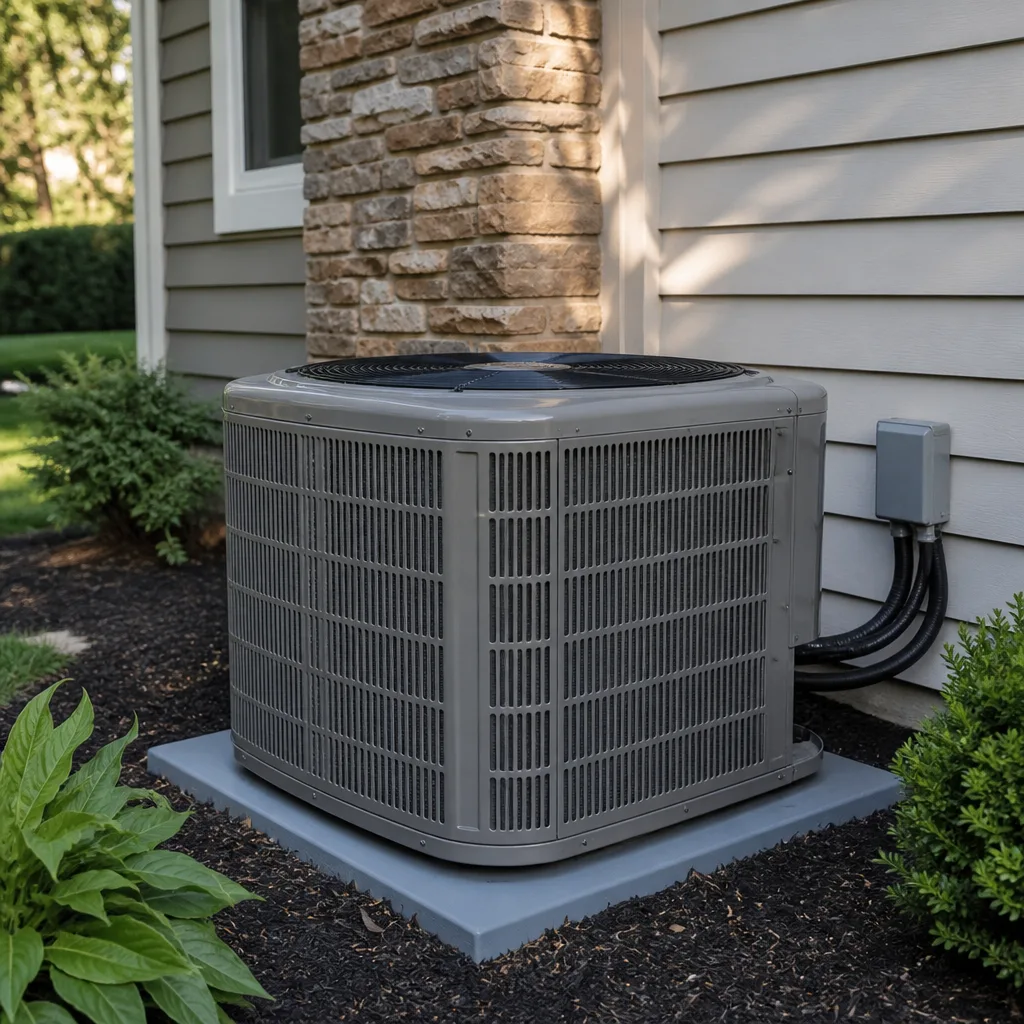 Carrier
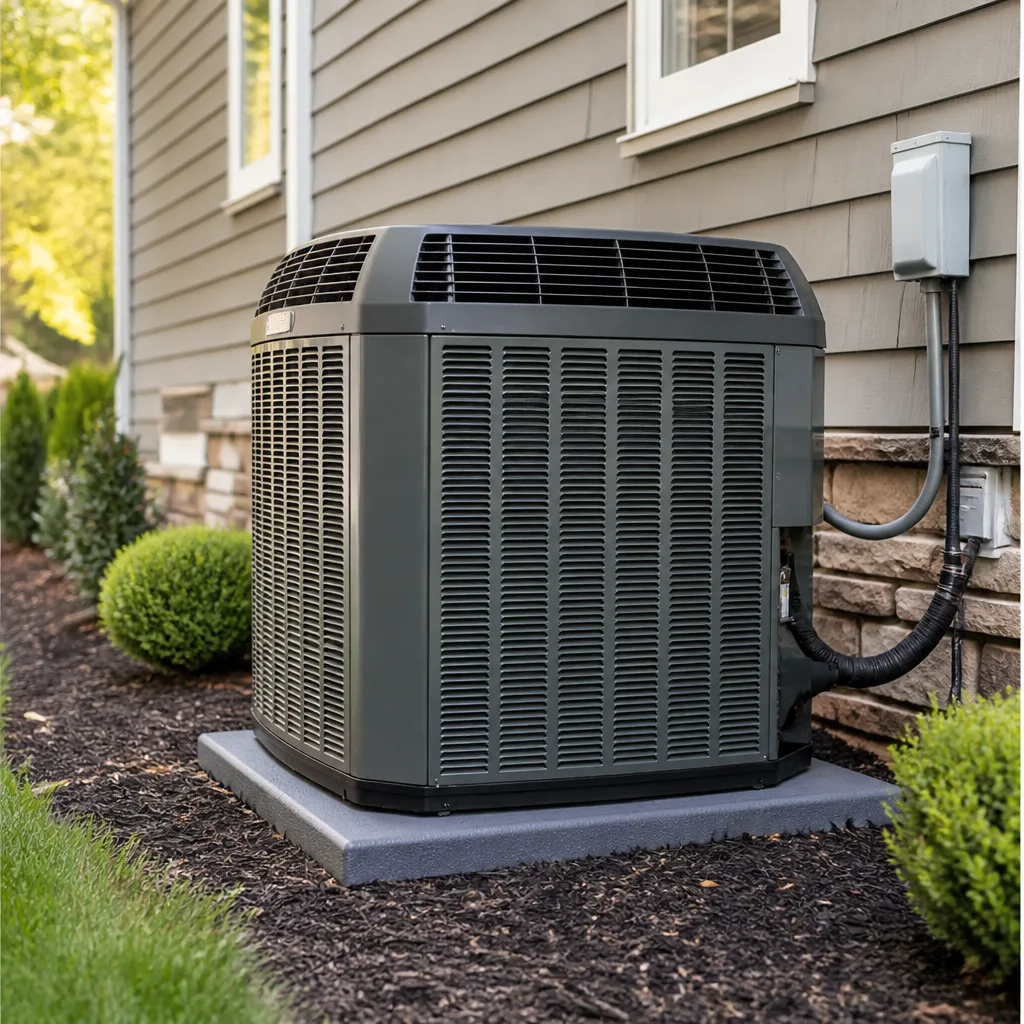 Trane
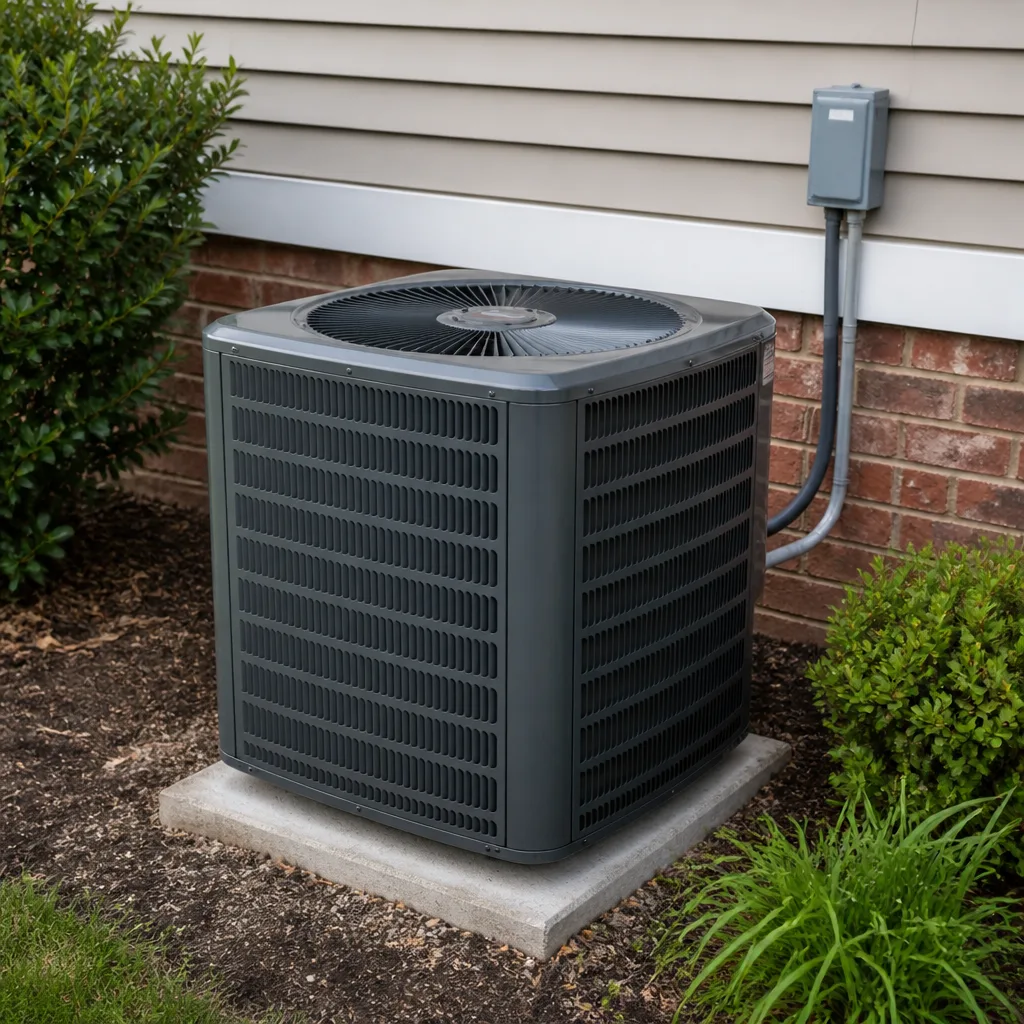 Goodman
Seasonal tune-up and full diagnostic on your Carrier, Trane, or Goodman system - readings shown to you before any repair is proposed
Diagnosis first, numbers second - you approve the repair price before a single part goes in.
Get your free estimateHVAC Warning Signs: A Hialeah Homeowner’s Reference Guide
Most homeowners treat HVAC warning signs like a checklist, hunting for one smoking gun that explains everything. In our experience, that approach fails more often than it works. A system that’s running but not cooling in Hialeah has at least six distinct root causes, and each one calls for a completely different fix: low refrigerant, a dirty evaporator coil, a failing compressor, a restricted air filter, a bad capacitor, or duct leakage bleeding cool air into a hot attic. Chasing a single symptom means you might “fix” the wrong thing. This guide teaches you to read symptom clusters – the patterns that make the diagnosis obvious – so you know what’s likely wrong before a technician arrives, and know when to stop guessing. The stakes here are higher than in milder climates: Hialeah summers run long, and a system that limps in July is a system you’ll need to replace before fall.
Quick Answer
Warning signs that matter most in Hialeah are clustered symptoms, not isolated ones: a system that runs but doesn’t cool well, combined with ice on the indoor coil and higher humidity indoors, usually points to airflow or refrigerant trouble, while short cycling combined with a warm supply vent usually points to refrigerant loss or an oversized system. Burnt smells mean shut the unit down and call a technician – that’s an electrical red flag, not a maintenance item. Older Hialeah homes raise the urgency on any of these, because aluminum wiring and aging attic ductwork compound problems that would be minor in a newer home. When in doubt, a free estimate from Banner AC Repair will tell you what’s actually failing.
Table of Contents
- Why Symptom Clusters Beat Single Red Flags
- Running But Not Cooling: What the Vent Temperature Tells You
- Short Cycling in Hialeah Heat: Why It’s More Urgent Here
- What Unusual Smells Actually Mean
- The Noise Diagnostic Chart
- Warning Signs Specific to Older Hialeah Homes
- R-22 Refrigerant: The Sign That Changes the Math
- What You Can Safely Check Yourself
Why Symptom Clusters Beat Single Red Flags
A single warning sign is information. Two warning signs that appear together is a diagnosis. Three is a pattern you can act on. That distinction matters more in Hialeah than most places, because the climate itself produces a lot of “harmless” symptoms. A system that seems to run forever in August isn’t necessarily broken; it’s just working against a load that doesn’t ease off at night like it does farther north. The question is never “did this symptom appear?” but “which symptoms appeared together, and over what period?”
We’ve seen homeowners replace perfectly good capacitors chasing a “not cooling” complaint that turned out to be a dirty coil. We’ve seen others ignore a clicking sound that was the contactor failing, only to burn out a compressor weeks later. The difference between those two outcomes wasn’t expertise. It was pattern recognition.
Here’s the mental model we use on every call:
- Temperature symptoms (warm air, ice, poor cooling) usually point to refrigerant, airflow, or compressor problems.
- Timing symptoms (short cycling, long run times, frequent starts) usually point to sizing, refrigerant charge, or control issues.
- Sensory symptoms (smells, sounds, vibration) usually point to electrical faults, mechanical wear, or biological growth.
When two categories overlap, the diagnosis narrows fast. A warm vent plus a short-cycling unit is a refrigerant story. A warm vent plus ice formation is an airflow or refrigerant story. A clicking sound plus short cycling is an electrical story. Learning to combine these categories is the whole skill, and it’s what lets you describe your problem clearly when you call for furnace repair or AC help.
Hialeah’s climate adds one wrinkle: heat and humidity never fully “reset” your system the way a cool night in other regions might. A marginal system stays marginal all summer, and the symptoms you notice in June are usually the symptoms you’ll still have in September unless something changes.
Running But Not Cooling: What the Vent Temperature Tells You
This is the single most useful diagnostic habit a homeowner can build, and almost nobody does it. The next time your system is running, hold an inexpensive thermometer at a supply vent – the register where cool air blows out – and check the reading. Then check a return vent nearby. The difference between them tells you more about your system’s health than any other five-minute test.
A properly working system produces a supply-to-return temperature split of roughly 16 to 22 degrees Fahrenheit. If the split is in that range, your refrigerant and compressor are doing their jobs. If the split is under 12 degrees, something is wrong: either the system isn’t moving enough air, or it isn’t producing cold enough air. Those are very different problems with very different answers.
Airflow problems versus refrigerant problems
Here’s the trick that separates them. A restricted evaporator coil or clogged filter produces two things at once: a warm supply vent and ice forming on or near the indoor coil. A low refrigerant charge produces a warm supply vent and ice forming on the outdoor unit’s copper lines. Where the ice shows up tells you which side of the system to investigate.
- Ice on the indoor coil (behind the filter, on the air handler): think airflow restriction first. Check your filter, then a technician checks for a dirty evaporator coil.
- Ice on the outdoor copper lines running to the compressor: think low refrigerant charge or a metering device problem.
- Ice in both places: usually a low charge combined with a restricted coil, and the two problems compound each other.
Note that ice buildup is always a symptom, never a cause. Topping off refrigerant without finding why it lost charge in the first place means the leak continues, and the ice returns. A proper diagnosis starts with leak detection and airflow verification, not a quick charge.
If your split is normal but the house still feels warm, the problem may not be in the air conditioning equipment at all – it could be duct leakage in the attic, inadequate attic insulation, or a system that was sized for a smaller load than your home actually carries. Our AC installation service starts with a load calculation, specifically to catch mismatches like this.
Short Cycling in Hialeah Heat: Why It’s More Urgent Here
Short cycling means your system turns on and off in rapid succession, often running only a few minutes before shutting down again. It’s annoying anywhere. In Hialeah, it’s urgent – and the reason comes down to how heat and humidity interact.
In a milder climate, a short-cycling system can limp along for a while without obvious consequences. In Hialeah’s summer heat, the equipment runs hotter, the compressor works harder, and every restart cycle involves a damaging current spike. That combination wears a compressor out far faster than steady operation does. A compressor that runs constantly at the right temperature can last for a decade or more. A compressor that restarts every five minutes in 95-degree heat is a compressor on borrowed time.
If your system short-cycles, look for these causes in this order:
- Oversized equipment: a system too big for the home cools fast, satisfies the thermostat, then shuts off and lets humidity rise. The result is a cool-but-clammy house that cycles endlessly. This is common in Hialeah homes where a past replacement didn’t check the load calculation.
- Low refrigerant charge: pressure safety switches trip once the system can’t maintain pressure. The unit shuts down, resets, and repeats.
- Dirty evaporator coil: restricted airflow causes the coil to freeze, and a frozen coil can trip a safety cutout.
- Failing capacitor or contactor: the electrical components that start the compressor can degrade and cause repeated starts and stops.
- Thermostat placement or failure: a thermostat in direct sun or near a supply vent can trigger premature shutoffs.
Notice what all five share: none of them improves on its own, and three of them (low refrigerant, dirty coil, capacitor) get worse with every cycle. If your short cycling started recently or intensifies on the hottest days, that’s a cluster worth calling about sooner rather than later. Our technicians have up to 10 years of experience reading exactly these patterns on equipment from Lennox, Goodman, Rheem, and York – and on a Goodman system, the electrical checks follow a different path than they do on a Rheem, which is why brand familiarity matters.
What Unusual Smells Actually Mean
Smells are the most-often-misread warning sign in residential HVAC, and the wrong response can turn a scheduling call into an emergency call. The three smell categories are entirely different problems with entirely different first responses. If you remember only one section of this guide, make it this one.
Musty, earthy, or stale-vegetation odor coming from the vents: this is biological growth, usually on the evaporator coil or in the drain pan. Hialeah’s year-round humidity creates the perfect environment for mold and mildew, and evaporator coils run wet much of the year. A one-time smell that fades is often a drain pan issue; a persistent smell that gets stronger when the system first starts is more likely coil growth. The fix involves cleaning the coil and addressing the moisture source, not masking the smell.
Burnt electrical smell – sharp, acrid, sometimes like hot plastic: shut the system off at the thermostat and at the breaker. Do not run it. This smell commonly points to a failing compressor, a burning-out contactor, or a frayed wire. Running the system could damage more components or start a fire. Call a professional before the system runs again.
Rotten-egg or sulfur smell: this is almost never an HVAC problem on a system without a gas furnace. If your home has gas equipment and you smell sulfur, treat it as a possible gas leak: leave the home, don’t flip switches, and call your gas utility from outside. This is a safety emergency, not an HVAC service call.
Burning-dust smell when the heat first runs: this is the mildest of the bunch, and usually harmless. Dust that settled on the heat exchanger over the off-season burns off during the first heating cycle. If the smell persists after an hour of running, or returns every time the system runs, call for service.
The pattern to remember: musty means moisture, acrid means electricity, sulfur means gas. Three smells, three very different first responses. When in doubt, shut the system down and call.
The Noise Diagnostic Chart
Every noise your HVAC system makes maps to a specific component family. Learning the map takes an afternoon and can save you thousands by catching a failing part before it takes other parts with it.
- Rattling: loose sheet-metal panels, a loose blower wheel, or debris that got into the cabinet. Usually an easy fix, but persistent rattling can shake loose electrical connections over time.
- Squealing or high-pitched whining: a failing blower motor bearing or a worn belt (on belt-driven systems). Left alone, a seized bearing can burn out the motor.
- Clicking at the outdoor unit: a contactor opening and closing. If clicking happens repeatedly without the system starting, the contactor or capacitor is failing and the compressor can’t start. This can burn out the compressor if not addressed.
- Banging or thumping at startup: a loose compressor mount, or in a heat pump a reversing valve problem. Loud banging on an older unit can also indicate a compressor that’s failing internally.
- Hissing: on an air conditioner, a hissing sound near the indoor unit often means refrigerant pressure escaping. Shut the system off and call a technician.
- Buzzing at the outdoor unit but no fan: a locked compressor or a bad run capacitor. Shut it down immediately; a stuck compressor under current can fail catastrophically.
The one pattern that should always trigger a call rather than a wait: metallic sounds combined with reduced cooling. Metal-on-metal under a load metric means something is actively wearing out, and the cost of replacing the worn part is always lower than the cost of replacing the parts it damaged. In our experience, Hialeah homeowners who catch a capacitor or contactor problem early avoid the compressor replacement that follows when the problem is ignored.
If the noise is on the heating side – a furnace with a banging or rumbling sound, especially on a Rheem or Goodman system with a conventional burners – treat it as urgent. Furnace noises can indicate combustion problems, and combustion safety is not a wait-and-see category. Shut off the gas supply and call for service.
Warning Signs Specific to Older Hialeah Homes
Hialeah has a large stock of homes built in the mid-20th century, and older construction produces its own set of HVAC warning signs that don’t appear in newer houses. These are the signs most often missed because they look like “normal” for the age of the home. They’re not.
Aluminum wiring compatibility issues
Some mid-century homes in Hialeah were built or updated with aluminum branch circuit wiring. When an HVAC system is replaced or a new disconnect installed, aluminum wiring must be connected properly – usually with a specific connector rated for aluminum, not a twist-on wire nut. Signs of a compatibility problem include flickering lights when the system starts, a warm or hot cover plate on the outdoor disconnect, or a burning smell near the electrical panel during AC startup. Any of these warrants an electrician’s review before the system runs again.
Attic duct deterioration
Flexible ductwork running through a Hialeah attic takes a beating: attic temperatures routinely climb high enough to accelerate the breakdown of duct insulation and the inner liner. Signs that your attic ductwork has degraded include rooms that never cool evenly, a system that runs constantly but never satisfies the thermostat, and visible condensation or sagging on duct runs. If your home was built before duct sealing became standard, an inspection of the attic ducts alongside an AC check is a smart move. Our Banner AC Repair technicians can inspect duct runs during a diagnostic visit.
Refrigerant line insulation wear
The foam insulation around outdoor refrigerant lines breaks down in sun and heat. Insulation that’s cracked, missing, or falling off means the system loses cooling capacity before the refrigerant ever reaches the evaporator coil. It’s an easy, inexpensive fix that’s often skipped because no one looks at the lines.
Thermostat age
An older electromechanical thermostat in a Hialeah home can drift by several degrees over time. A thermostat that reads “off” by 3 degrees will short-cycle your system all summer. If your thermostat predates the digital display era, the thermostat itself may be contributing to your symptoms.
If you’re evaluating whether to keep investing in older equipment or replace it, our Hialeah team handles both repair and replacement, so the recommendation comes from what the equipment needs rather than from which service bills more.
R-22 Refrigerant: The Sign That Changes the Math
If your air conditioning system was installed before roughly 2010, it may run on R-22 refrigerant. R-22 has been phased out of production, which means the supply is constrained and the cost of a recharge reflects that scarcity. This is the one warning sign that can turn a cheap repair into an uneconomic one, and it’s worth checking before you authorize any repair.
The label on the outdoor condenser unit tells you what refrigerant the system uses. If it says R-22 (sometimes labeled HCFC-22), that’s a fact that should inform your repair-or-replace decision. A system that’s otherwise in good shape and simply needs a recharge is a different situation than one that’s been losing charge and will need it again. Our technicians check the refrigerant type on every diagnostic call, and it’s a big part of why we can tell a homeowner honestly whether a repair makes sense.
Here’s how to read the R-22 situation in plain terms:
- R-22 system, small repair, no leak history: repair is usually the right call. The refrigerant charge isn’t the issue.
- R-22 system, slow leak requiring repeated recharges: each recharge costs more, and the leak will continue. A replacement decision is worth considering seriously.
- R-22 system with a failing compressor: replace. The cost of compressor and recharge outweighs the value of an aging system.
Newer systems run on R-410A or newer refrigerants and don’t carry this cost pressure. If you’re in the replacing phase, brand-neutral guidance matters. We service equipment from all nine of the major brands – Carrier, Trane, Lennox, Goodman, Rheem, York, Daikin, Bryant, and American Standard – so a recommendation during an installation consultation is based on your home, not on which brand carries a bigger dealer margin.
What You Can Safely Check Yourself
A few things are safe for any homeowner to check before calling for service. They’re also the things we ask about on the phone, because they often change the diagnosis and the first visit. Never open the electrical panel, remove panels from the air handler or condenser, or touch refrigerant lines or wiring. Those are dangerous, and they’re the technician’s job.
- Check the air filter: a filter so clogged you can’t see light through it drags down airflow and can cause ice on the coil. Replace it, then run the system for an hour and re-check the symptoms.
- Check the thermostat: make sure it’s set to “Cool,” the fan is on “Auto,” and the setpoint is at least 3 degrees below room temperature.
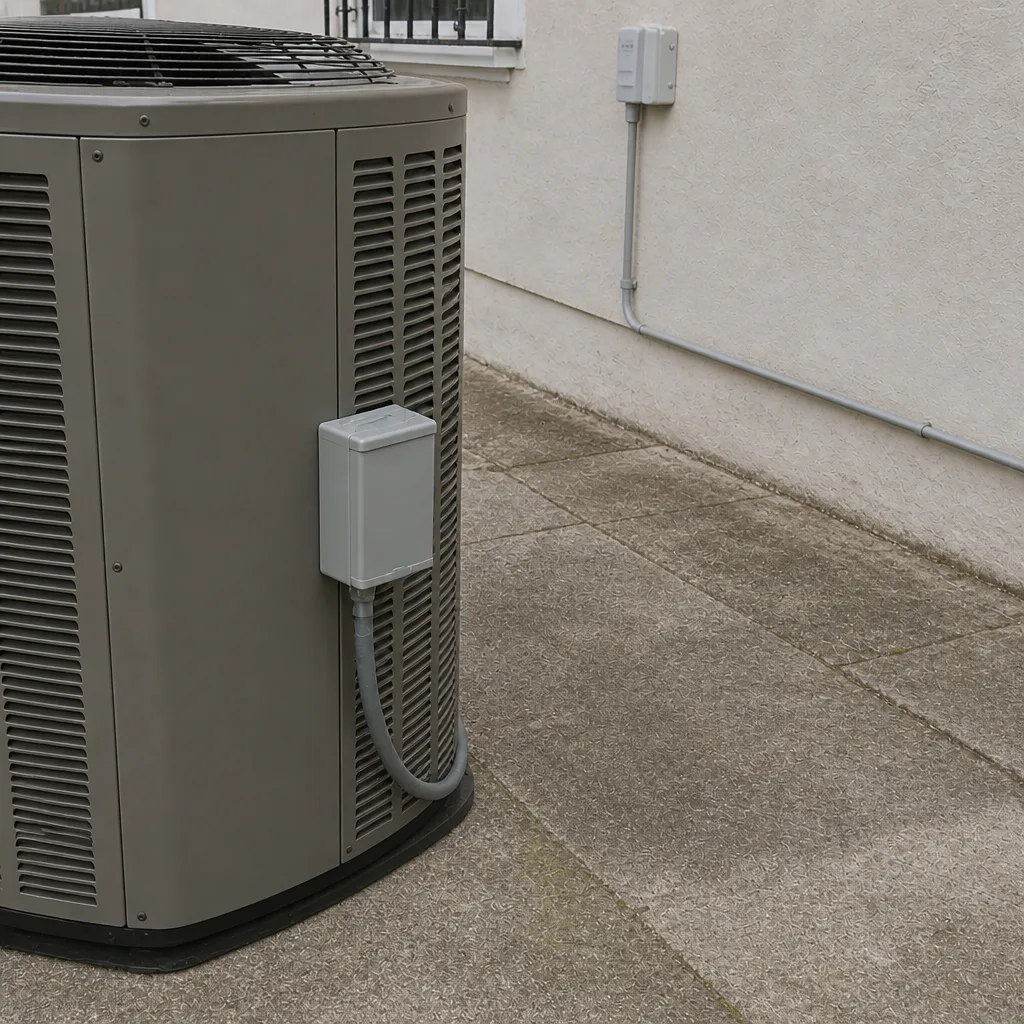
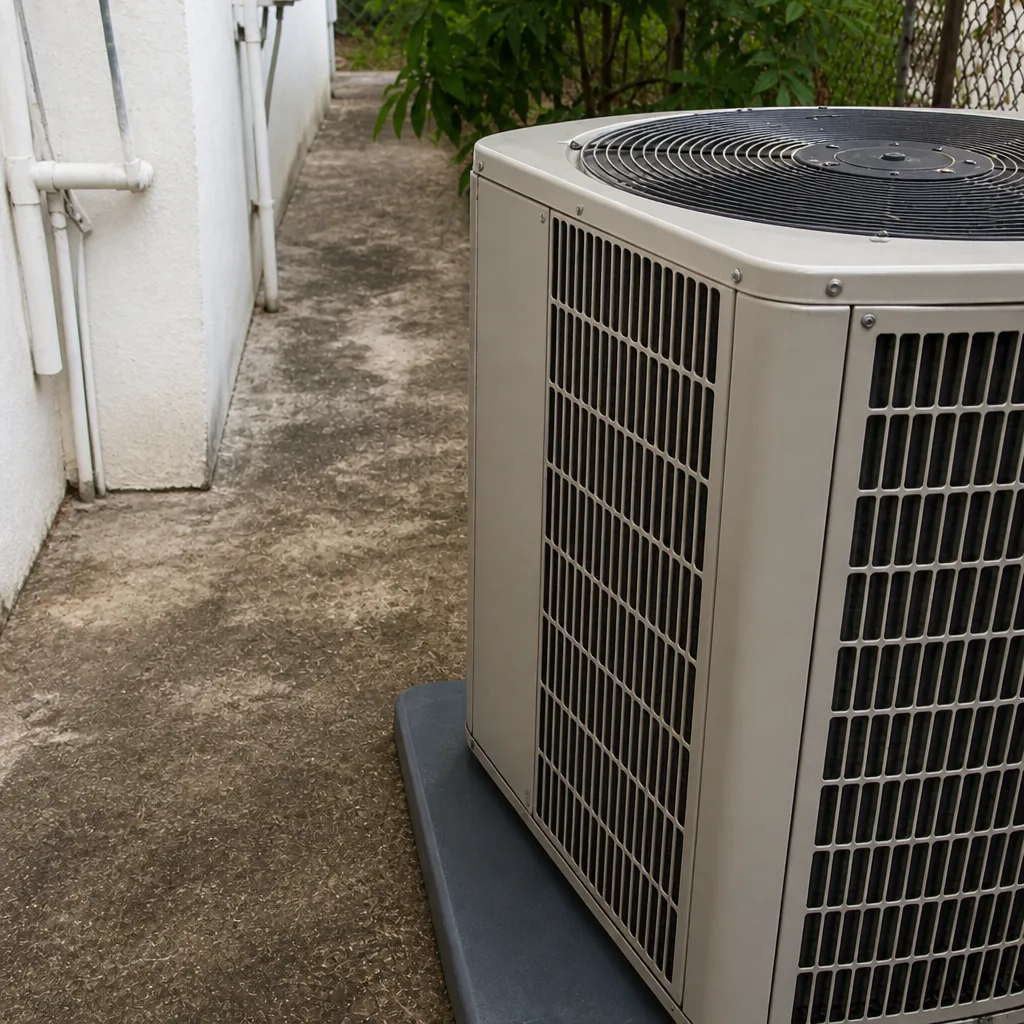
- Check the outdoor unit: make sure the condenser is clear of leaves, debris, and landscaping that blocks airflow, and that the fan turns.
- Check the breaker: confirm the outdoor unit’s breaker is on. If it trips repeatedly, don’t reset it more than once – call a technician.
- Check supply vents: confirm the registers are open and unobstructed by furniture or rugs.
- Check for ice: look at the indoor coil and the outdoor refrigerant lines. Where the ice is tells us which side of the system to investigate.
If those checks don’t change anything, the next step is diagnosis. For heating calls, our furnace repair team runs a repair-first diagnostic; for cooling calls, the same approach applies to the air conditioning system.
Styles & brands we work with
- AC repair
- Furnace & heating
- Heat pumps
- Ductless mini splits
- Carrier
- Trane
- Goodman
Common Mistakes to Avoid
- Topping off refrigerant without finding the leak. A recharge that doesn’t address the leak is a temporary fix with a recurring bill. The next warm month brings the same symptoms back.
- Replacing a part based on a single symptom. “It’s short-cycling, so replace the capacitor” is a guess, not a diagnosis. Hialeah summers punish guesses because a month of misdiagnosis can burn out a compressor.
- Ignoring short cycling during the shoulder season. A system that short-cycles in October will short-cycle harder in July, and the damage compounds. Fix it while the demand is lower.
- Assuming a warm vent means low refrigerant. A dirty filter or a clogged evaporator coil produces the exact same symptom, and it’s the cheaper fix that should be checked first.
- Letting a burning smell “air out” before calling. The burnt-electrical smell is the one warning sign you don’t wait on. Shut the system down at the thermostat and the breaker.
- Oversizing a replacement system. A bigger unit runs less, cools faster, and leaves a Hialeah home colder but damper. Correct sizing starts with a load calculation, not a rule of thumb.
- Skipping the attic duct check on an older home. A brand-new condenser connected to degraded ductwork delivers warm air. Inspect both sides of the system when diagnosing comfort issues.
- Assuming all brands behave the same. A failing contactor on a Goodman unit and a failing contactor on a Rheem unit require different expertise. The technician who knows your equipment will diagnose faster and replace the right part.
See the difference
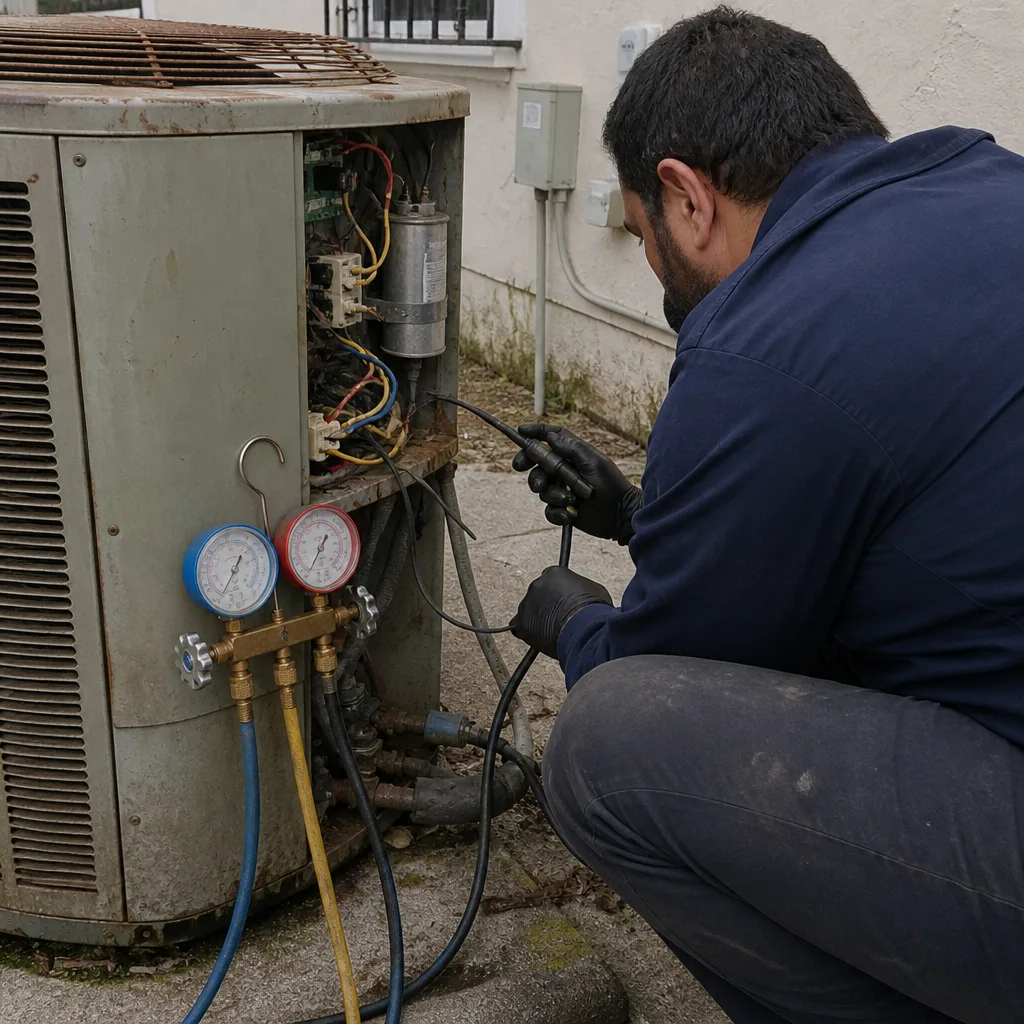 Before
 After
 Before
 After
 Before
 After
When to Call a Professional
Some warning signs are things you check yourself; some are things a technician needs to see. Call for service when you see any of these: a supply-to-return split under 12 degrees, short cycling that started within the past week, ice forming indoors or on the outdoor lines, a burnt electrical smell, a metallic noise combined with reduced cooling, an R-22 system that has needed multiple recharges, or any sound or smell on the heating side that persists after the first hour of operation. If multiple warning signs appear together, say so on the call – that cluster is the most useful thing you can tell a technician. Banner AC Repair offers free estimates in Hialeah. We answer 24/7, and with fast dispatch from 7am to 7pm Sunday through Friday, we can usually be at your door the same day. Call (866) 806-7345.
Frequently Asked Questions
The single most common warning sign in Hialeah homes is a system that’s running but not keeping up – a warm supply vent, long run times, and a house that won’t drop below the setpoint on hot afternoons. That cluster usually points to low refrigerant, a dirty evaporator coil, or a duct leak. The fix varies, so a proper diagnostic is the fastest path to a real answer. Call (866) 806-7345 for a free estimate.
Short cycling means the system runs for only a few minutes and shuts off, then restarts within minutes. Long cycles mean the system runs for 20 to 30 minutes and then shuts off, which is normal in Hialeah summer heat. The tell is frequency: if your system starts more than about five times an hour when it’s warm outside, it’s short cycling and should be checked. Call (866) 806-7345 for a diagnostic visit.
A burnt electrical smell is never normal and requires shutting the system down and calling for service. A burning-dust smell on the first heating cycle of the season is the only innocent exception, and it fades within about an hour. If you’re not sure which smell you have, treat it as the electrical kind. Call (866) 806-7345 and we’ll schedule a diagnostic.
You can check the symptoms – a warm supply vent, ice on the outdoor copper lines, and a temperature split under 12 degrees – but you can’t safely check the refrigerant charge itself, and no homeowner should attempt to open refrigerant lines. Only a licensed technician with gauges can confirm charge. Call (866) 806-7345 for an exact diagnosis and a free estimate.
Not automatically – “still works” is real information, and replacement is only worth discussing when repair stops making economic sense. The signs that shift the math are an R-22 refrigerant system with a leak history, a compressor failure, or a home where the ducts and wiring are also due for attention. Our team handles both repair and replacement, so the recommendation comes from what your equipment needs. Call (866) 806-7345 for a free estimate.
Jot down the cluster you see – the symptoms, when they started, and what you checked – and call us. We answer 24/7. A call outside dispatch hours is booked into the next opening, Sunday through Friday, 7am to 7pm. We’re closed on Saturday, so the fastest path to a technician is a call today and a Sunday appointment. Call (866) 806-7345 and we’ll get you scheduled.
The Bottom Line
Individual HVAC warning signs lie; symptom clusters tell the truth. A warm vent alone could be a filter; a warm vent plus ice on the indoor coil is airflow. A clicking sound alone could be normal; clicking without a start is a failing contactor. In Hialeah’s long, hot summers, symptoms don’t resolve on their own – they compound, and the system that limps in June will need replacement by September. Learn the clusters, check the safe items yourself, and call when the pattern points to more than a filter or a thermostat setting. Our technicians have up to 10 years of experience diagnosing exactly these patterns across nine major brands, and we’re ready to look at your equipment whenever you are. Call (866) 806-7345 for a free estimate.
We answer 24/7. Fast dispatch from 7am to 7pm, Sunday through Friday.
Written by the team at Banner AC Repair.